
High Humidity and Heat Increase Risk of Heat-Related Illness
High Humidity and Heat Increase Risk of Heat-Related Illness
As temperatures rise this week, high humidity levels can make conditions feel much hotter than the actual air temperature. Humidity slows the body’s ability to cool itself through sweating, increasing the risk of heat-related illnesses.
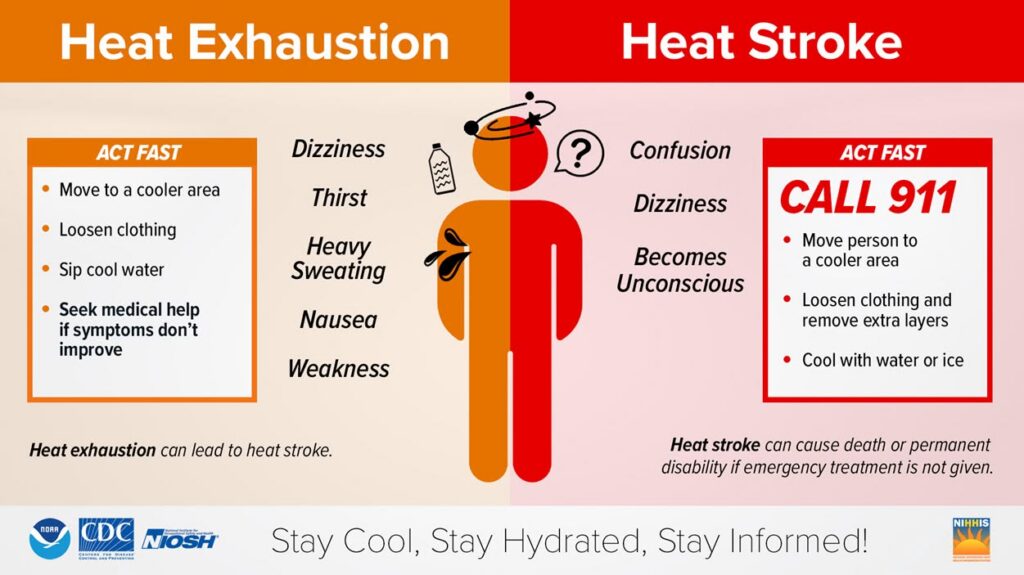
Understanding the warning signs of heat exhaustion and heat stroke can help prevent a serious medical emergency.
Heat Exhaustion
Heat exhaustion occurs when the body loses too much water and salt through sweating.
Common symptoms include:
- Heavy sweating
- Cool, pale, or clammy skin
- Weakness or fatigue
- Dizziness or fainting
- Headache
- Nausea or vomiting
- Muscle cramps
If someone is experiencing heat exhaustion:
- Move them to a cool location.
- Encourage them to drink water or a sports drink.
- Loosen clothing.
- Apply cool, wet cloths to the skin.
Seek medical attention if symptoms worsen or do not improve.
Heat Stroke
Heat stroke is the most serious heat-related illness and requires immediate medical attention.
Symptoms may include:
- Body temperature of 103°F (39.4°C) or higher
- Hot, red, dry, or damp skin
- Confusion or altered mental status
- Slurred speech
- Seizures
- Loss of consciousness
If you suspect heat stroke:
- Call 911 immediately.
- Move the person to a cooler area.
- Use cool cloths, ice packs, or cool water to help lower body temperature.
- Do not give the person anything to drink if they are unconscious or confused.
Heat Safety Tips
To reduce your risk of heat-related illness:
- Drink water regularly, even if you do not feel thirsty.
- Avoid strenuous outdoor activities during the hottest part of the day.
- Wear lightweight, loose-fitting clothing.
- Take frequent breaks in air-conditioned spaces.
- Never leave children or pets in a parked vehicle.
- Check on older adults, young children, and individuals with chronic health conditions.
Learn More
For additional information about heat safety and preventing heat-related illness, visit:
• Heat.gov: https://www.heat.gov
• CDC Extreme Heat Resources: https://www.cdc.gov/extreme-heat
• National Weather Service Heat Safety: https://www.weather.gov/safety/heat
Helpful Links
External Resources
Related News
East Jordan Plastics Fire Update
The fire at East Jordan Plastics in South Haven has been extinguished. No injuries were…
Free Community Health Screening Event
Take a step toward a healthier you! The Cass County Council on Aging invites you…
MDHHS Warns About Serious Health Risks From Recreational Nitrous Oxide Use
The Michigan Department of Health and Human Services (MDHHS) is warning residents about the serious…